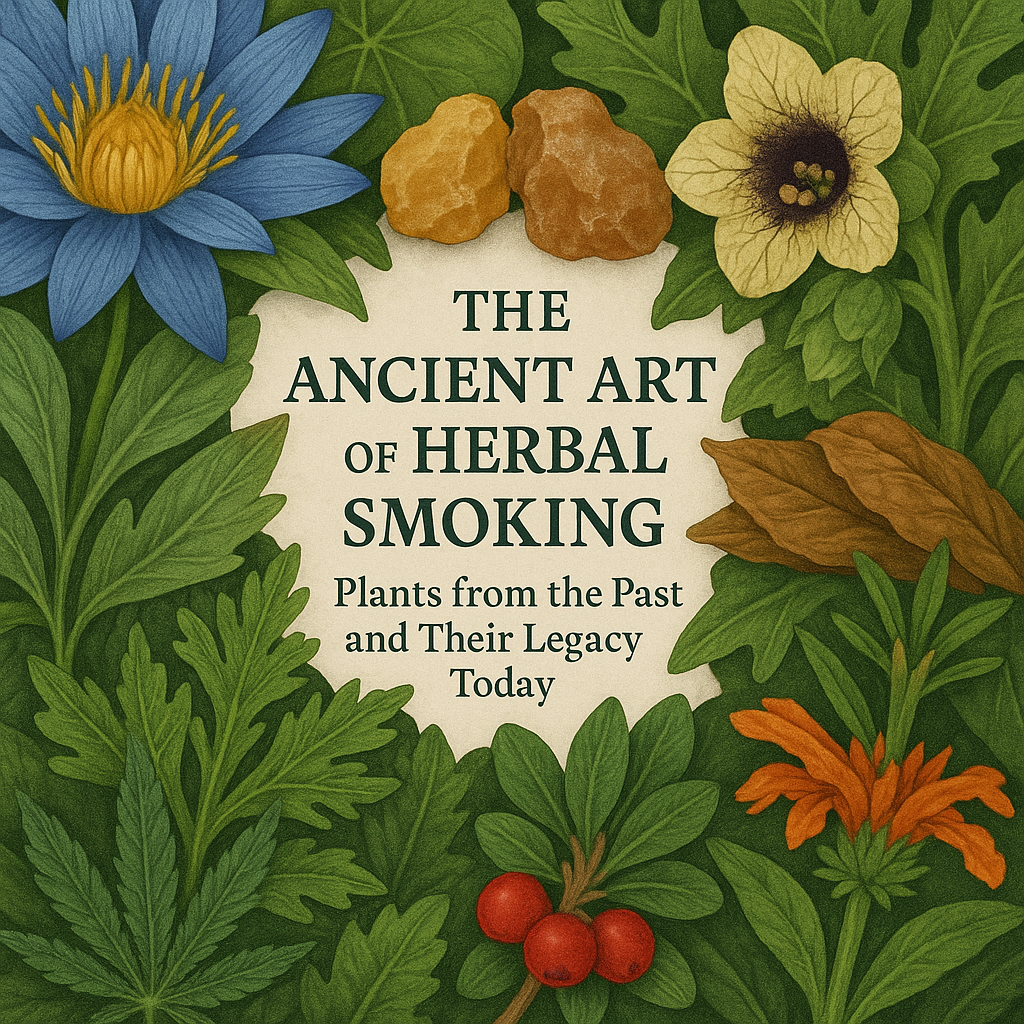
For millennia, civilizations across the globe have engaged in the ritual of smoking herbs for medicinal, spiritual, and recreational purposes. From the tombs of Egyptian pharaohs to the ceremonial fires of Native American tribes, herbs have played a critical role in connecting humanity with nature and the divine. While some of these herbs are still widely available, others have faded into obscurity, faced extinction, or become entangled in modern legal frameworks. Let’s take a deep dive into the fascinating world of ancient herbal smoking traditions and explore their enduring influence.

Key Herbs:
Blue Lotus (Nymphaea caerulea):
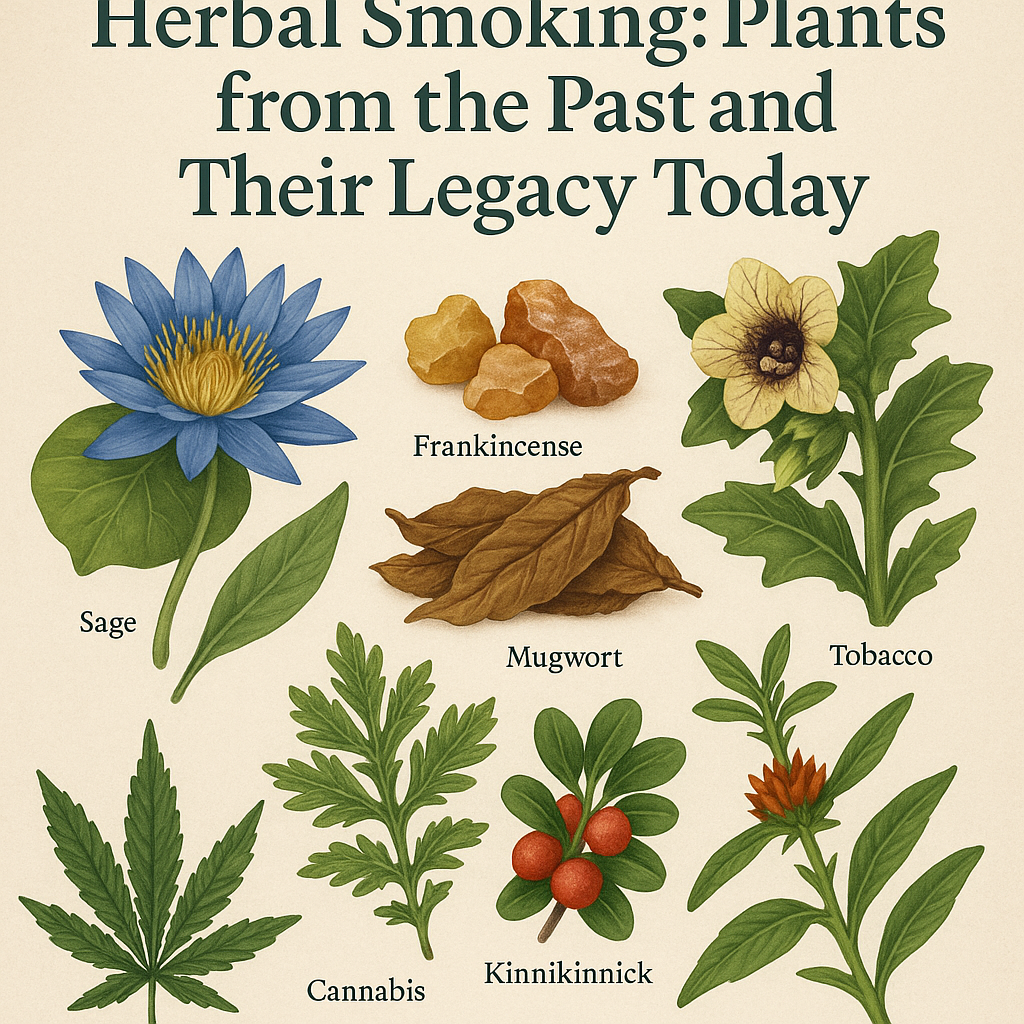
This beautiful water lily was prized by the ancient Egyptians for its psychoactive properties. Often depicted in art and hieroglyphs, Blue Lotus was smoked or infused into wine to induce relaxation, euphoria, and vivid dreams. It was believed to facilitate spiritual awakenings and connect users with the gods.
Henbane (Hyoscyamus niger): A potent herb with hallucinogenic properties, henbane was used in Greece and Rome for both medicinal and ritualistic purposes. Although known for its toxicity, henbane’s sedative and trance-inducing effects made it a key ingredient in ancient incantations and divination ceremonies.
Frankincense & Myrrh: While primarily burned as incense, inhaling the smoke of these resins was believed to purify the spirit and offer protection. They were common in rituals and religious ceremonies.
Modern Status:
Blue Lotus remains available today, often marketed as a tea or smoking blend. However, it is rare in the wild.
Henbane is now restricted or banned in many places due to its toxicity.
Key Herbs:
Tobacco (Nicotiana rustica): A central element in Native American rituals, this species of tobacco was far more potent than the commercial varieties we know today. It was smoked during ceremonies to communicate with spirits and offer prayers.
Sage (Salvia spp.): Widely used for smudging, sage was also occasionally smoked for its calming effects.
Mugwort (Artemisia vulgaris): Known for enhancing dreams and inducing a state of relaxation, mugwort was used in smoking blends and sacred ceremonies.
Kinnikinnick: A blend of herbs, including bearberry leaves, kinnikinnick was smoked for spiritual purposes and social gatherings.
Modern Status:
Nicotiana rustica remains part of ceremonial practices among Indigenous tribes, though less common outside these contexts.
Sage and mugwort are still widely used today, often for spiritual cleansing and herbal remedies.
Key Herbs:
Cannabis (Cannabis sativa, indica): Used for centuries in India and China for medicinal and spiritual purposes, cannabis held a prominent place in Hindu rituals and ancient Chinese medicine.
Opium (Papaver somniferum): Valued for its pain-relieving and euphoric effects, opium was both smoked recreationally and used medicinally across Asia.
Clove (Syzygium aromaticum): In Indonesia, clove cigarettes (kreteks) have a long-standing cultural tradition, believed to promote respiratory health and relaxation.
Modern Status:
Cannabis has seen a wave of legalization but remains prohibited in some areas.
Opium is heavily regulated and illegal in most parts of the world.
Clove cigarettes are still popular in Indonesia, though regulated in some countries.
Key Herbs:
Khat (Catha edulis): A stimulant chewed or smoked for energy and heightened awareness, khat remains a part of East African and Arabian culture.
Dagga (Leonotis leonurus): Sometimes referred to as wild cannabis, dagga was used in African shamanic practices for its mild psychoactive effects.
Modern Status:
Khat is banned in much of Europe and North America but legal in some African and Middle Eastern countries.
Dagga continues to be used in traditional practices and herbal medicine.
Key Herbs:
Mugwort (Artemisia vulgaris): A staple in European pagan rituals, mugwort was smoked to enhance visions and facilitate lucid dreaming.
Heather (Calluna vulgaris): Used for its calming effects, heather smoke was believed to cleanse and protect.
Belladonna (Atropa belladonna): Though highly toxic, belladonna was sometimes smoked in shamanic rituals for its hallucinogenic properties.
Modern Status:
Mugwort and heather are still accessible, though belladonna is rarely used due to its high toxicity.
Interestingly, marshmallow (Althaea officinalis), known primarily for its medicinal properties, may have also been smoked by some ancient cultures. While not as widely documented as other herbs, marshmallow was used in herbal blends for its soothing properties, which could help with respiratory issues. Its leaves were sometimes dried and added to smoking mixtures to create a smooth, calming experience. Today, marshmallow leaf is still found in some herbal smoking blends marketed for relaxation.
The ancient practice of smoking herbs bridges the gap between the physical and the spiritual, the medicinal and the mystical. While some plants have disappeared from use, others remain deeply ingrained in cultural traditions worldwide. As interest in herbal remedies grows, the legacy of these ancient herbs continues to inspire modern herbalists and spiritual seekers alike.
Share this post on your socials.